
The Holocaust Museum DC Tour: Confronting History Face to Face

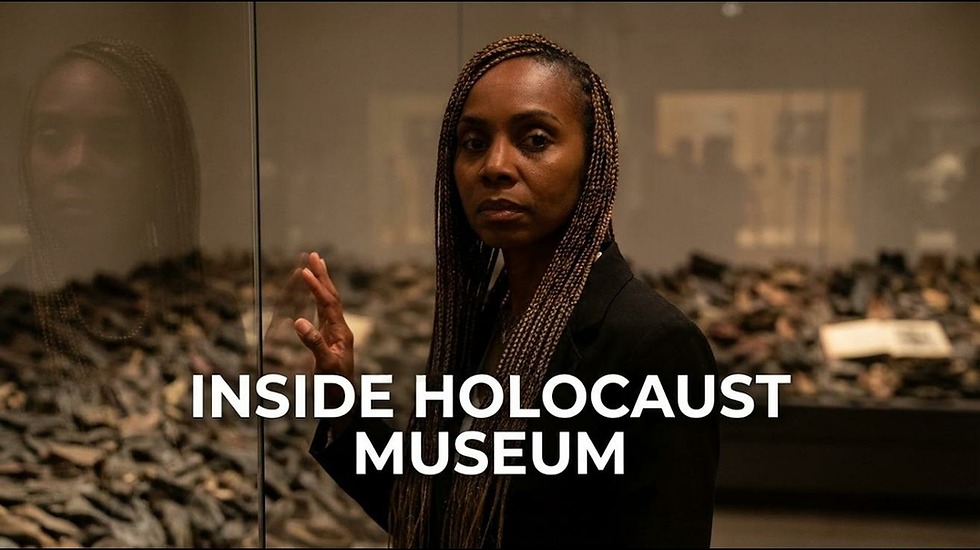
There are some places you visit that are not meant to entertain you.
They are meant to make you pause.
That is how I felt walking through the United States Holocaust Memorial Museum in Washington, DC. From the moment we stepped inside, the quiet felt different. It was not just silence. It felt like the building itself was asking us to slow down, pay attention, and truly see what happened.
The United States Holocaust Memorial Museum describes itself as a living memorial that calls people to confront hatred, prevent genocide, and promote human dignity. After walking through the exhibits, that mission feels very real.
Walking Into History
One of the most powerful parts of the visit was how personal the experience became.
At the museum, visitors to the Permanent Exhibition receive identification cards that tell the stories of real people who lived through the Holocaust. The museum explains that these cards are designed to help visitors connect individual lives to the broader history.
Holding an identification card changes the way you move through the museum.
You are no longer only reading dates, policies, and events. You are following a person's life. Someone had a family. Someone had dreams. Someone had a home. Someone had a normal life before hatred, violence, and government-backed persecution destroyed it.
That is what makes the museum so heavy and so necessary.
When the Stories Become Personal
The exhibit on ancient hatred and modern violence stood out because it showed how dangerous patterns do not appear overnight.
The Holocaust was not one isolated moment. It was built through propaganda, exclusion, silence, and escalating violence. The museum defines the Holocaust as the systematic, state-sponsored persecution and murder of six million Jews by the Nazi regime and its allies and collaborators.
That history is painful to face, but it matters.
In the video, one survivor’s testimony describes forced labor, exhaustion, selections, fear, and the daily fight to live one more day. The words are difficult to hear, but they remind us that history is not abstract. It happened to real people in real bodies, real families, and real communities.
A Visit That Requires Reflection
One part of the museum focused on a once-flourishing Jewish community that was destroyed in just a few days. The photographs showed people in ordinary moments. A love letter. A businesswoman. A friend at a resort. A photo studio. A life before violence.
That part stayed with me because it reminded me how quickly normal life can be taken away when hatred is allowed to grow.
As a financial counselor, I often talk about planning, choices, and the future. But some experiences remind me that legacy is not only about money. Legacy is also about memory, values, responsibility, and what we choose to teach the next generation.
Why This Visit Matters for Families
This is not an easy museum to walk through, but it is an important one.
For families, young adults, students, and anyone visiting Washington, DC, the Holocaust Museum offers more than a history lesson. It creates space for honest conversations about human dignity, courage, silence, and responsibility.
A visit like this can help children and adults understand that history is not just something that happened “back then.” The lessons still matter now.
It also reminded me that meaningful travel does not always have to be expensive, flashy, or packed with activities. Sometimes the most valuable part of a trip is the conversation it creates afterward.
Planning a Visit With Intention
The museum is located in Washington, DC, near many other national museums and monuments. Timed-entry tickets are required for the Permanent Exhibition, although the museum notes that tickets are not required to enter the building or view some other exhibitions.
Before visiting, I would recommend giving yourself time. This is not the kind of museum you want to rush through. Plan space in your day to sit, reflect, and talk through what you saw.
A thoughtful trip includes more than transportation, lodging, and meals. It also includes emotional space for the experience.
Watch my visit to the Holocaust Museum in Washington, DC, and walk with me through a powerful experience of remembrance, reflection, and history.
Final Thoughts on the Holocaust Memorial Museum
Walking through the Holocaust Memorial Museum was emotional, sobering, and necessary.
It reminded me that remembering is not passive. Remembering asks something of us. It asks us to pay attention. It asks us to speak carefully. It asks us to notice patterns of hatred before they become normalized.
Most of all, it asks us to see people as people.
That is why this visit mattered.
Planning a meaningful trip and trying to make the numbers work? Harris Financial Coaching can help you build a travel budget that supports the memories without creating financial stress.


Comments